.svg)
The next GLP-1: is your leadership team ready for a disruption it can't see yet?
What Future Food Tech London 2026 means for food business leaders

GLP-1 came up in almost every session we sat in at Future Food Tech London last week. What struck us wasn't the scale of its impact on how people eat, though that is considerable. It was how openly people admitted the industry had underestimated it, and how quickly the conversation moved on to what the next one might be. It may have nothing to do with weight loss drugs, and it may arrive just as fast.
We found this interesting given where we operate. We spend much of our time talking to R&D, sustainability and procurement leaders across food and beverage, and the two days gave shape to three gaps we were already seeing in those conversations.
Everyone underestimated GLP-1. The next disruption could be something completely different, and the question is whether your leadership team would see it coming.
The horizon gap
The immediate effects of GLP-1 are well rehearsed by now. People are eating less, many without changing what they eat, so every mouthful has to work harder nutritionally, and some are willing to pay more for less. Rania Abou Samra, Global Head of R&D at Lesaffre, suggested these drugs could one day be as ordinary as a painkiller in the bathroom cabinet. If she is right, the change is only beginning.
Most of the R&D leaders we speak to plan three years ahead, and the ones who stand out are also thinking about what could arrive in ten. A longer view is only worth having if it changes what the business does now, though, because nobody reliably predicted the seismic impact of GLP-1, and a strategy built for the next decade can still miss something that lands next year. The discussion of the cocoa crisis showed what that looks like in practice. Speakers described using predictive modelling to spot ingredient risk early. The forecasting itself was less of a concern; what mattered more was giving R&D the time and budget to develop alternatives before a shortage occurs. The question being asked of any leadership team right now is: can you see anything on the horizon that will change where money and people are going this year?
The capability gap
Zibi Lewicki, Global Head of Innovation and R&D at The Magnum Ice Cream Company, made a point that resonated with us. Life sciences has always spent heavily on research, yet what we eat can arguably do more for health over the long term. The World Health Organization is clear that a healthy diet helps protect against diabetes, heart disease, stroke and cancer. We are seeing that shift in the briefs that come to us. More companies are focusing on premium products that pack more nutrition into every serving, and they want R&D leaders who understand consumers well enough to anticipate their needs rather than react to them.
The ownership gap
Consumers increasingly expect to know where their food comes from, but delivering on that is far messier than the ambition suggests. Roel van Poppel of OFI argued that regenerative agriculture should become standard practice, yet many smallholder farmers can't afford to make the switch, and a business that stops buying from them could take away the livelihoods it depends on. Nor can production simply move away from regions at high risk, when new land and adapted seeds take decades to establish.
The other route is to need less from those supply chains in the first place. Biomanufacturing and precision fermentation are being developed partly for that reason, as ways of producing ingredients that depend less on land and on crops exposed to climate risk and deforestation. It is a promising answer, but it raises the same question of ownership. A decision to back a new ingredient touches R&D, procurement, sustainability and finance at once, so who in the business actually owns it?
Cost has made all of this harder. Consumers want to see sustainability reflected in what they buy but often can't pay for it, and companies that recognise how critical it is have spent the last few years dealing with more pressing crises. Procurement Leaders reported this year that sustainability has dropped down the priority list for global procurement organisations, under pressure from economic realities, politics and the rush towards AI. Nobody at the event was held up as having solved these trade offs.
What interests us is where these trade offs actually get decided. Most chief sustainability officers we speak to want to report to the CEO, and it's easy to see why. But a reporting line doesn't by itself give a CSO authority over the decisions made in procurement, engineering and the supply chain, or access to the investment those decisions need. Without that, a CSO can set an ambition the business isn't set up to deliver, and the real choices end up stuck between departments.
Closing the gap
None of these gaps are closed by hiring alone, and some aren't closed by hiring at all.
The ownership gap is the clearest example. If accountability for sustainability is unclear, appointing a stronger CSO won't fix it until the leadership team agrees who decides what. The same goes for a view of the future that never reaches this year's budget. That is work the existing team has to do together.
The capability gap is different. Where a business genuinely needs judgement it doesn't yet have, the right person has to be found, and the brief should describe the decisions they will have to make rather than the experience on their CV alone. Some of that need will also be temporary. A reformulation programme, a regulatory submission or a sourcing transition may call for senior leadership for a year or two rather than a decade, and an interim leader is sometimes the better answer.
Continue the conversation
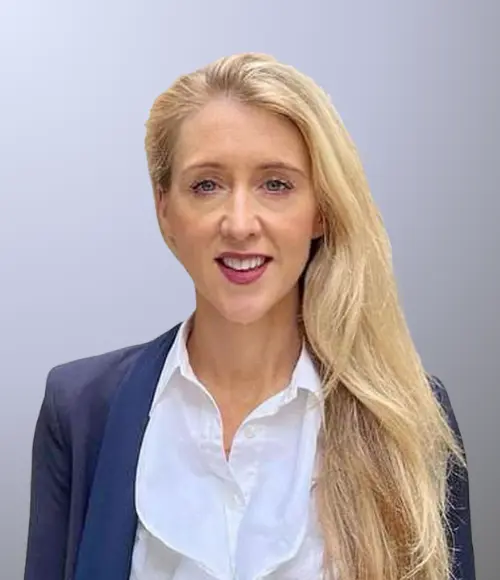
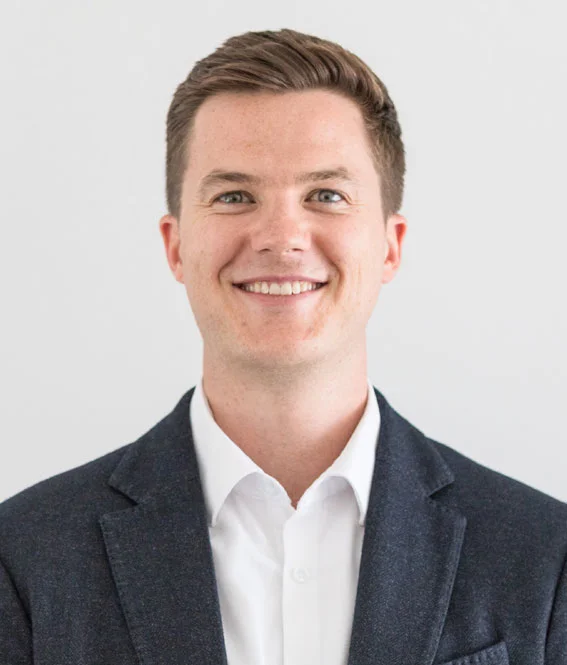
If this is something your leadership team is discussing right now, we would be glad to share our experience and talk it through. Speak to Lisa or Callum.
Explore More Insights
.jpg)

.svg)
Continue the conversation
If this perspective resonates, we’d be happy to share what we’re seeing across organisations and investors.
